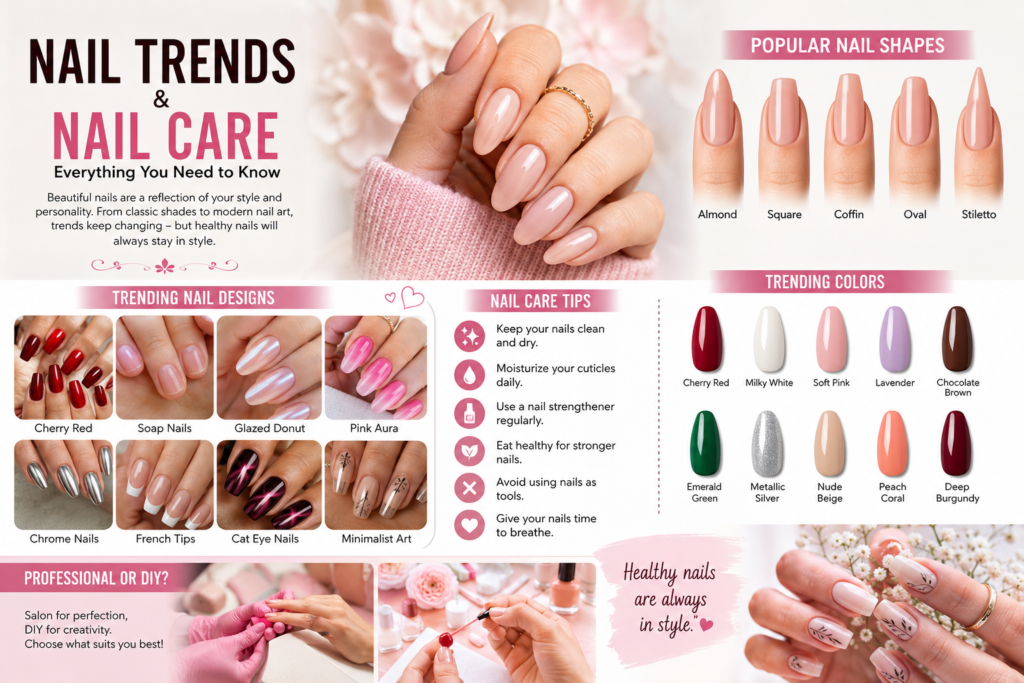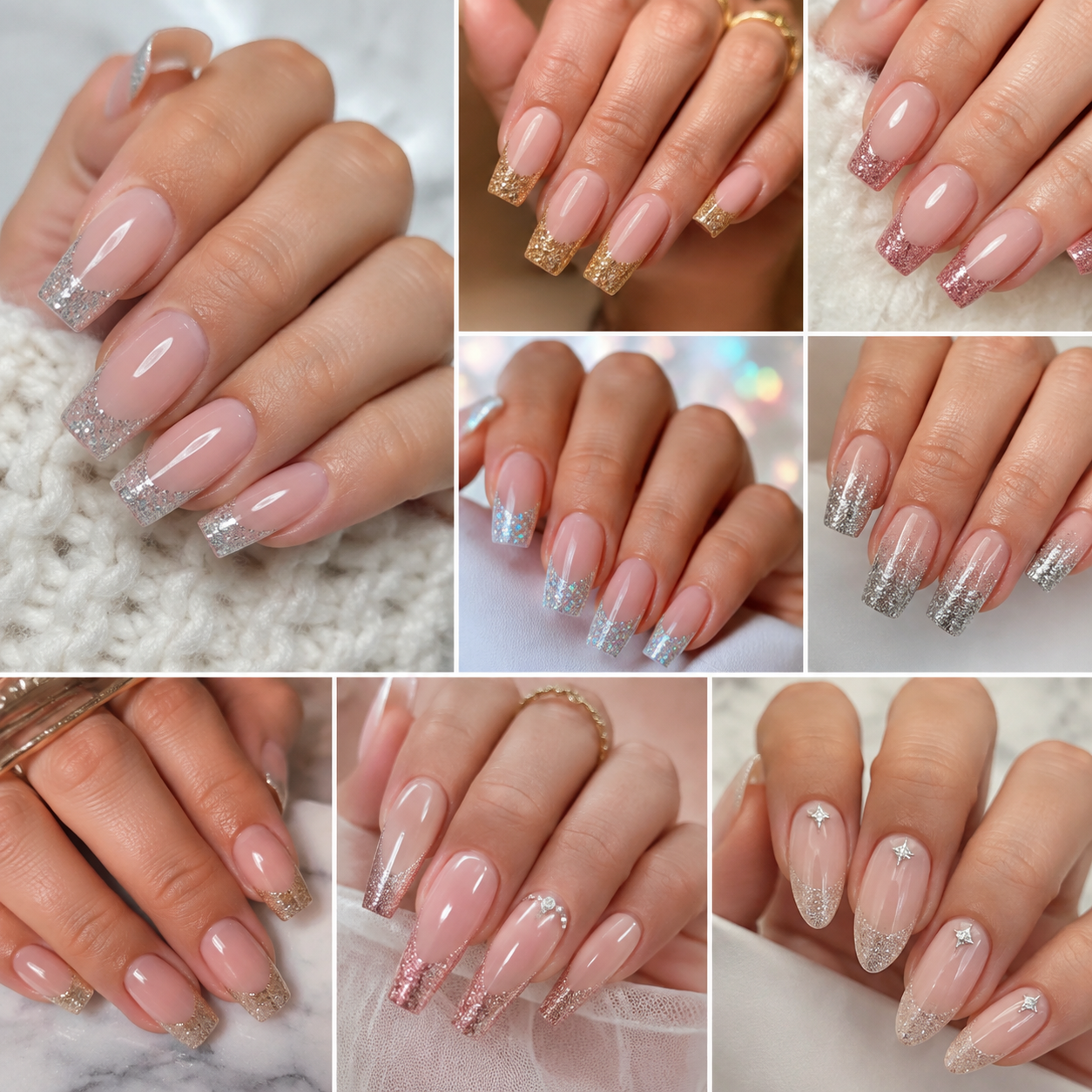
Healthy nails are more than just a beauty trend. They are a sign of good hygiene and overall wellness. Whether you love colorful nail polish, elegant nail art, or prefer a natural look, proper nail care is essential for keeping your nails strong, smooth, and attractive. With the right habits and products, anyone can improve the health and appearance of their nails.
In this guide, you’ll learn everything you need to know about nail care, including daily routines, nutrition, common nail problems, and professional tips for maintaining beautiful nails all year long.
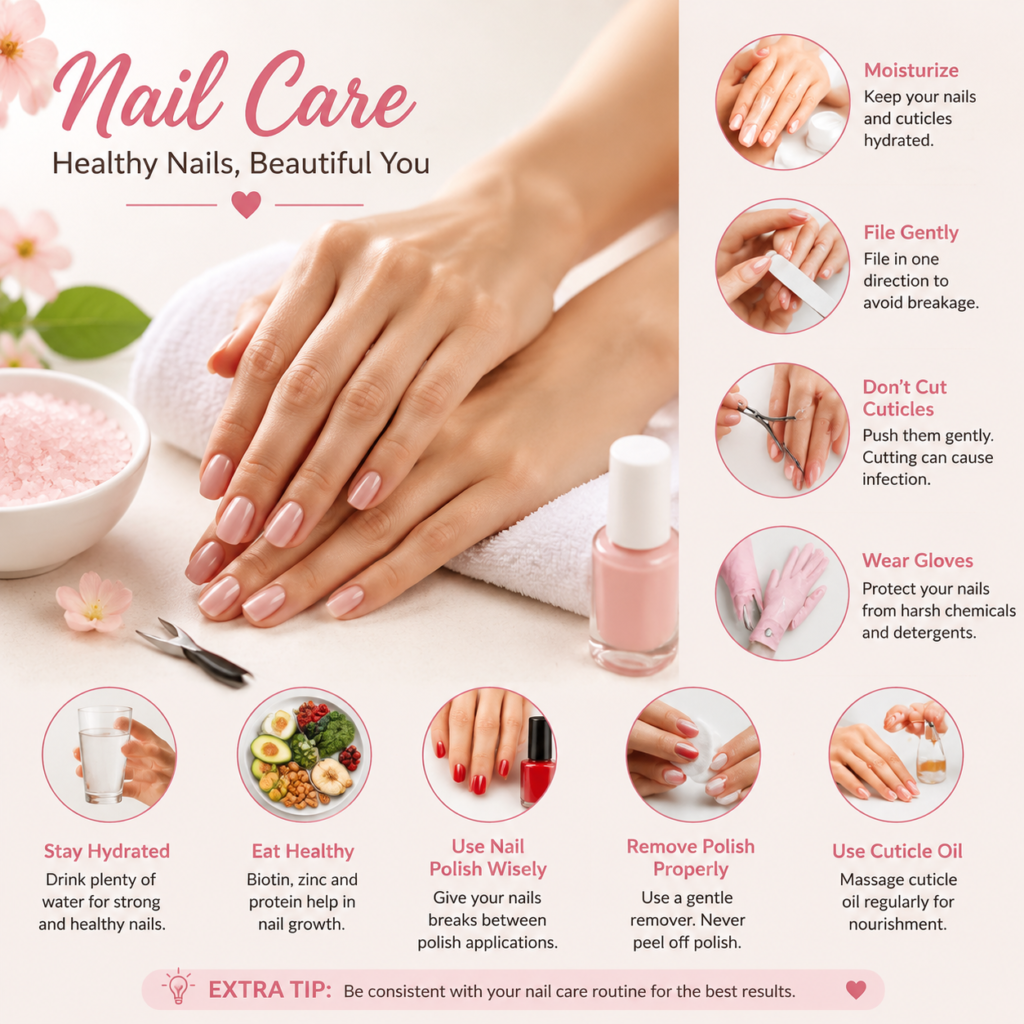
Why Nail Care Matters
Your nails protect the sensitive tips of your fingers and toes while helping you perform everyday tasks. Healthy nails are smooth, strong, and free from discoloration or deep ridges. Poor nail care can lead to brittle nails, infections, peeling, and slow growth.
Regular nail care offers several benefits:
Prevents nail breakage
Encourages healthy nail growth
Reduces the risk of infections
Improves the appearance of hands and feet
Makes nail polish last longer
Supports overall hand hygiene
Taking just a few minutes each week to care for your nails can make a noticeable difference.
Essential Daily Nail Care Routine
- Keep Your Nails Clean
Wash your hands regularly and gently clean underneath your nails using a soft nail brush. Dirt and bacteria can collect under long nails, increasing the risk of infections.
Avoid using sharp tools to clean under your nails, as they can damage the nail bed.
- Moisturize Regularly
Dry nails are more likely to crack and split. Apply hand cream several times a day, especially after washing your hands.
Massage cuticle oil into your nails every evening. Oils containing vitamin E, jojoba oil, almond oil, or argan oil help keep nails flexible and healthy.
- Trim Your Nails Properly
Trim your nails every one to two weeks depending on how quickly they grow.
Use quality nail clippers and finish shaping with a fine nail file. File in one direction rather than moving back and forth, which can weaken the nail.
- Don’t Bite Your Nails
Nail biting damages the nail plate and surrounding skin. It also increases the chance of bacterial infections and can permanently affect nail growth.
If nail biting is a habit, try using a bitter-tasting nail treatment or keeping your nails neatly polished.
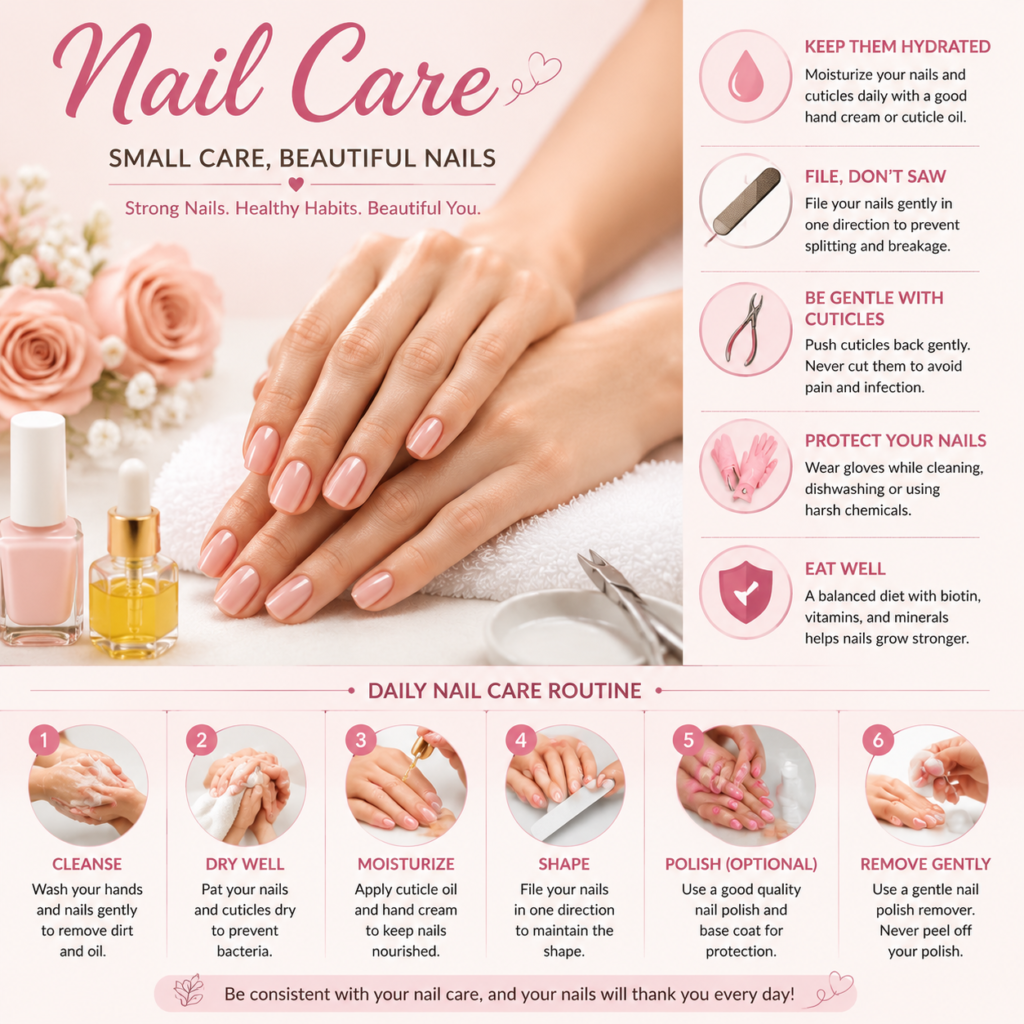
Nutrition for Strong Nails
Healthy nails start from within. Eating a balanced diet provides the nutrients your nails need for healthy growth.
Protein
Nails are made primarily of keratin, a protein. Include foods such as:
Eggs
Chicken
Fish
Beans
Lentils
Greek yogurt
Biotin
Biotin is one of the most popular vitamins for stronger nails.
Good sources include:
Eggs
Almonds
Sweet potatoes
Spinach
Walnuts
Iron
Iron deficiency can lead to thin, brittle nails.
Eat foods like:
Red meat
Spinach
Lentils
Pumpkin seeds
Zinc
Zinc supports healthy nail growth and repair.
Excellent sources include:
Pumpkin seeds
Chickpeas
Cashews
Beef
Omega-3 Fatty Acids
Healthy fats keep nails moisturized and flexible.
Find omega-3s in:
Salmon
Sardines
Chia seeds
Flaxseeds
Walnuts
Drink plenty of water daily because hydration is also essential for healthy nails.
Caring for Your Cuticles
Cuticles protect new nail growth from bacteria and infections. Many people mistakenly cut them too aggressively.
Instead:
Apply cuticle oil daily.
Gently push cuticles back after a shower.
Never rip or cut them excessively.
Remove only loose dead skin if necessary.
Healthy cuticles lead to healthier nail growth.
Best Nail Care Products
Investing in quality nail care products can greatly improve nail health.
Useful products include:
Cuticle oil
Strengthening nail treatment
Hand cream
Glass nail file
Nail buffer
Base coat
Gentle nail polish remover
Nail brush
Avoid products containing excessive amounts of harsh chemicals whenever possible.
Nail Polish Tips
Wearing nail polish is perfectly safe when done correctly.
For healthier nails:
Always use a base coat.
Apply thin layers.
Allow each coat to dry completely.
Remove polish gently.
Give your nails a break every few weeks.
Avoid peeling off nail polish, as this removes layers of the natural nail.
Choosing the Right Nail Polish Remover
Acetone removes polish quickly but can dry out nails.
Non-acetone removers are gentler for regular use, although they may take longer to remove darker polish.
After using remover, always wash your hands and apply moisturizer or cuticle oil.
Protect Your Nails During Daily Activities
Many everyday tasks expose your nails to damage.
Wear gloves while:
Washing dishes
Cleaning the house
Gardening
Using strong cleaning chemicals
Gloves help prevent nails from becoming dry, weak, or stained.
Common Nail Problems
Brittle Nails
Brittle nails often result from:
Frequent hand washing
Dry weather
Harsh chemicals
Nutritional deficiencies
Use moisturizing treatments and avoid excessive exposure to water.
Peeling Nails
Peeling may occur because of:
Dehydration
Over-filing
Repeated polish removal
Nail trauma
Strengthening treatments and hydration usually help improve peeling.
Yellow Nails
Yellow discoloration can result from:
Dark nail polish
Smoking
Fungal infections
Always use a base coat to prevent staining.
White Spots
Small white spots are usually caused by minor nail injuries rather than calcium deficiency.
They normally grow out naturally.
Hangnails
Never pull hangnails.
Instead:
Soften the skin.
Trim them carefully with sanitized nail scissors.
Apply moisturizer afterward.
Healthy Nail Habits
Good habits make a significant difference over time.
Always remember to:
Keep nails dry after washing.
Avoid using nails as tools.
Use clean nail equipment.
Disinfect manicure tools regularly.
Wear gloves during household chores.
Moisturize hands several times daily.
Protect nails from harsh chemicals.
Consistency is more important than expensive treatments.
Professional Manicures
Professional manicures can enhance your nails, but safety should always come first.
Choose salons that:
Sterilize all equipment
Use fresh files when possible
Maintain clean workstations
Employ licensed technicians
If anything appears unsanitary, it’s better to choose another salon.
Seasonal Nail Care
Winter
Cold weather often causes dry, cracked nails.
Increase moisturizing, wear gloves outdoors, and use nourishing cuticle oils.
Summer
Sun exposure, chlorine, and saltwater can weaken nails.
Apply moisturizerafter swimming and keep nails hydrated.
Natural Home Remedies
Several simple home remedies may improve nail health.
Coconut Oil
Massage warm coconut oil into nails before bedtime for added moisture.
Olive Oil
Soak nails in warm olive oil for 10 minutes once or twice a week.
Lemon and Baking Soda
This combination may help reduce mild nail stains, but use it sparingly to avoid dryness.
Aloe Vera Gel
Fresh aloe vera helps soothe dry cuticles and surrounding skin.
Signs You Should See a Doctor
While many nail issues are harmless, consult a healthcare professional if you notice:
Persistent pain
Thick, crumbly nails
Green or black discoloration
Severe swelling
Nails separating from the nail bed
Sudden changes in nail shape or color
These symptoms may indicate infections or underlying health conditions.
Final Thoughts
Beautiful nails begin with healthy habits rather than expensive products. Keeping your nails clean, moisturized, properly trimmed, and protected from damage will help them stay strong and attractive throughout the year. A balanced diet rich in protein, vitamins, and minerals further supports healthy nail growth from the inside out.
Whether you enjoy simple natural nails or creative nail art, maintaining a consistent nail care routine is the foundation of long-lasting beauty. With patience and regular attention, your nails can become stronger, healthier, and more beautiful every day.