Clothing and Style: A Complete Guide to Dressing with Confidence
Clothing is more than just fabric stitched together. It is a powerful form of self-expression that reflects personality, culture, lifestyle, and confidence. The way you dress influences how others perceive you and how you feel about yourself. Developing a personal style does not require an expensive wardrobe. Instead, it involves understanding what suits your body, lifestyle, and preferences while choosing clothes that make you feel comfortable and confident.
Understanding Personal Style
Personal style is the unique way you combine clothing, accessories, footwear, and grooming to create your appearance. It evolves over time as your interests, career, and lifestyle change. Rather than following every fashion trend, focus on creating a wardrobe that represents who you are.
Ask yourself these questions:
- What colors do I enjoy wearing?
- Which outfits make me feel confident?
- Do I prefer casual, classic, sporty, elegant, or trendy fashion?
- What kind of clothing fits my daily routine?
Knowing the answers helps you build a wardrobe that works for your personality.
Building a Versatile Wardrobe
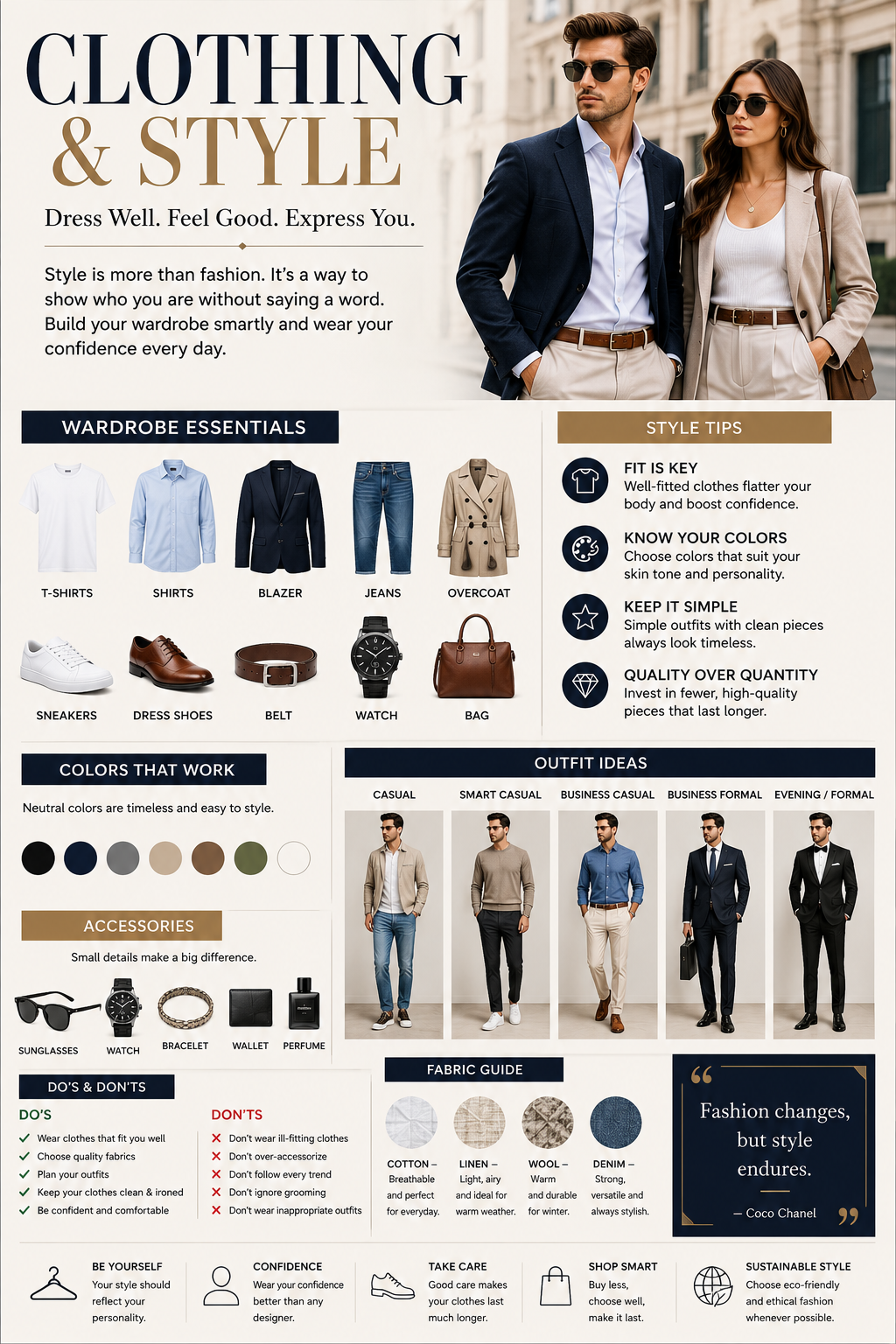
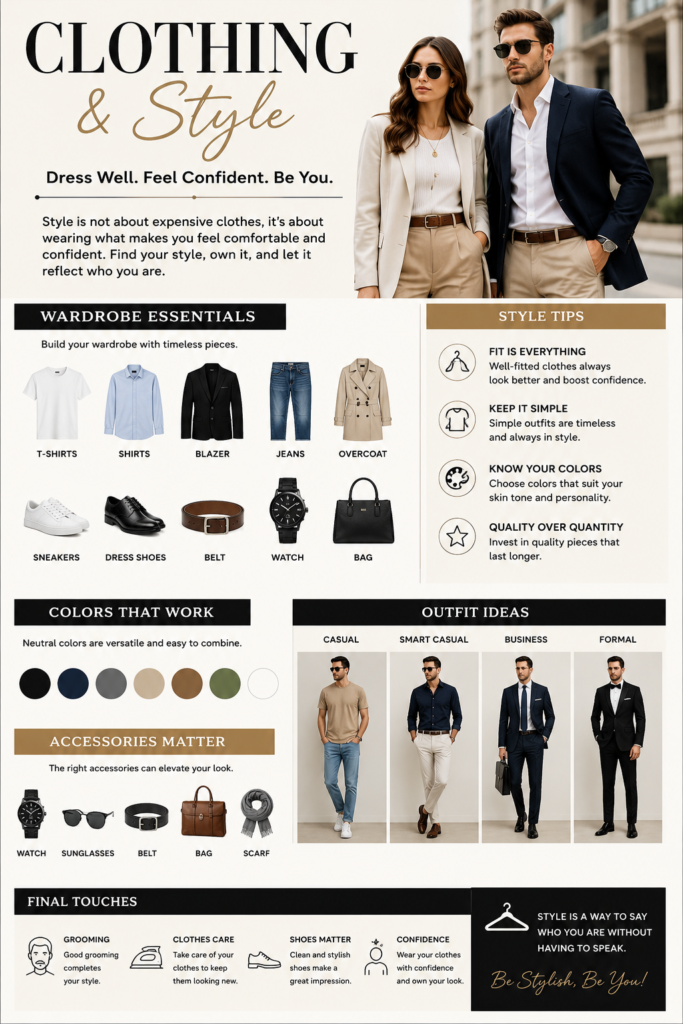
A practical wardrobe begins with timeless essentials that can be mixed and matched for different occasions. Investing in quality basics often saves money in the long run because they last longer and remain fashionable.
Essential wardrobe pieces include:
- Plain white and black T-shirts
- Well-fitting jeans
- Neutral-colored trousers
- Button-up shirts
- Comfortable sneakers
- Formal shoes
- Blazer or jacket
- Little black dress or simple formal dress
- Cardigan or sweater
- Quality denim jacket
These basics create countless outfit combinations suitable for work, casual outings, and special occasions.
The Importance of Proper Fit
No matter how expensive an outfit is, it will not look good if it doesn’t fit properly. Clothes should complement your body shape without being too tight or too loose.
When shopping, pay attention to:
- Shoulder alignment
- Sleeve length
- Waist fit
- Trouser length
- Overall comfort
Tailoring inexpensive clothes often makes them look more premium than buying expensive garments that fit poorly.
Choosing Colors Wisely
Color plays an important role in fashion. Certain shades complement your skin tone better than others.
General color guidelines include:
Warm skin tones:
- Olive
- Mustard
- Brown
- Coral
- Cream
- Warm green
Cool skin tones:
- Navy blue
- Emerald green
- Purple
- Burgundy
- Gray
- White
Neutral colors such as black, white, beige, navy, and gray are versatile and easy to combine with brighter shades.
Dressing for Different Occasions
Every occasion has its own dress expectations. Choosing the right outfit shows respect for the event and boosts your confidence.
Casual Wear
Casual clothing focuses on comfort while maintaining style.
Examples include:
- Jeans
- Polo shirts
- T-shirts
- Sneakers
- Casual dresses
- Hoodies
Business Wear
Professional clothing should appear neat and polished.
Typical office attire includes:
- Dress shirts
- Blazers
- Dress pants
- Pencil skirts
- Loafers
- Formal shoes
Formal Wear
Formal events require elegant clothing such as:
- Suits
- Evening gowns
- Dress shoes
- Sophisticated accessories
Always check the dress code before attending weddings, business dinners, or formal ceremonies.
Accessories Complete the Look
Accessories enhance even simple outfits without overwhelming them.
Popular accessories include:
- Watches
- Belts
- Sunglasses
- Scarves
- Jewelry
- Handbags
- Hats
Choose accessories that complement rather than compete with your clothing.
Seasonal Fashion Tips
Spring
Choose lightweight fabrics, pastel colors, and comfortable layering pieces.
Summer
Wear breathable fabrics like cotton and linen to stay cool. Light colors help reflect heat.
Autumn
Layer sweaters, jackets, scarves, and boots while incorporating earthy tones like brown, rust, and olive green.
Winter
Invest in warm coats, knitwear, thermal clothing, boots, gloves, and quality outerwear to stay comfortable without sacrificing style.
Fabric Matters
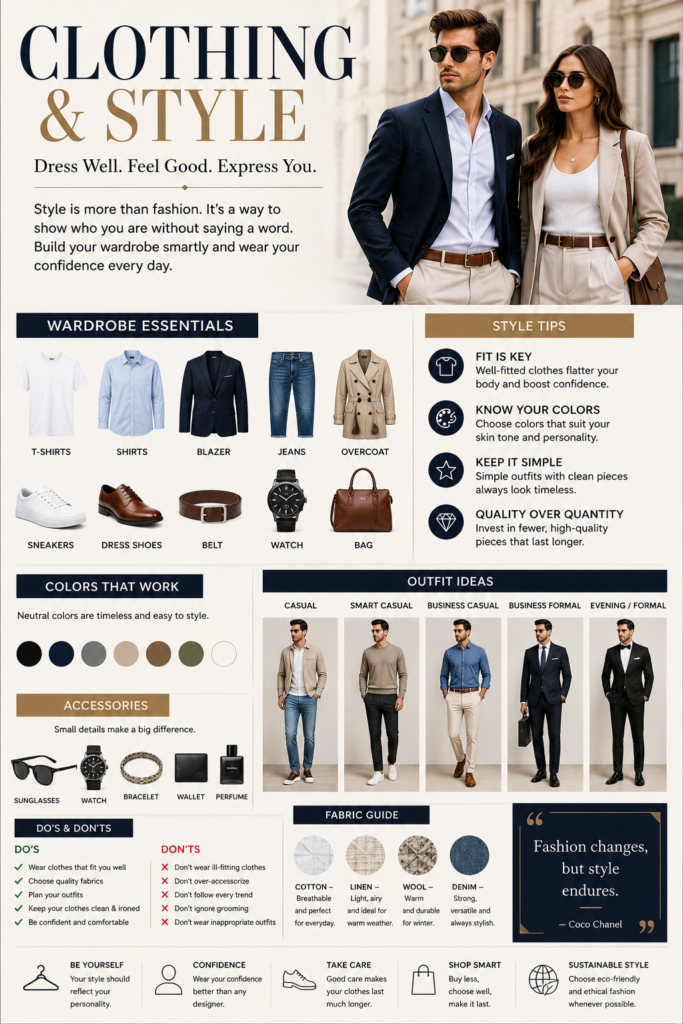
Different fabrics provide different levels of comfort, durability, and appearance.
Common fabrics include:
Cotton
- Soft
- Breathable
- Comfortable for daily wear
Linen
- Lightweight
- Ideal for hot weather
- Natural appearance
Wool
- Warm
- Durable
- Perfect for winter
Silk
- Luxurious
- Smooth texture
- Suitable for formal occasions
Denim
- Strong
- Long-lasting
- Great for casual wear
Understanding fabrics helps you make smarter purchasing decisions.
Sustainable Fashion
The fashion industry has a significant environmental impact. Sustainable fashion encourages mindful shopping and responsible consumption.
Ways to support sustainable fashion include:
- Buy quality instead of quantity.
- Repair damaged clothing.
- Donate unused garments.
- Shop second-hand when possible.
- Choose eco-friendly materials.
- Support ethical fashion brands.
These habits reduce waste while saving money.
Fashion Mistakes to Avoid
Many people make simple style mistakes that affect their overall appearance.
Common mistakes include:
- Wearing clothes that don’t fit properly.
- Ignoring grooming.
- Over-accessorizing.
- Wearing wrinkled clothing.
- Choosing uncomfortable shoes.
- Following every trend without considering personal style.
- Wearing inappropriate outfits for the occasion.
Avoiding these mistakes instantly improves your overall presentation.
Confidence Is the Best Style
The most fashionable people are often the most confident rather than those wearing the most expensive clothes. Confidence comes from wearing outfits that suit your personality and make you feel comfortable.
Stand tall, smile naturally, maintain good posture, and wear your clothes with confidence. Your attitude has a greater impact than any designer label.
Caring for Your Clothes
Proper clothing care extends the life of your wardrobe.
Helpful maintenance tips include:
- Read washing instructions carefully.
- Wash dark and light colors separately.
- Store seasonal clothing properly.
- Iron garments when needed.
- Hang jackets and dresses correctly.
- Polish leather shoes regularly.
Well-maintained clothing always looks newer and more attractive.
Conclusion
Clothing and style are about much more than following trends. They reflect your personality, professionalism, and confidence. Building a timeless wardrobe with quality basics, choosing clothes that fit well, understanding colors and fabrics, and dressing appropriately for different occasions all contribute to a polished appearance. By focusing on comfort, quality, sustainability, and self-expression, you can create a personal style that remains fashionable for years to come. Remember, the best outfit is one that makes you feel confident, comfortable, and authentically yourself.